Public speaking for kids builds confidence, communication, and leadership — giving them a lifelong head start when they begin early.
Research shows that when kids start early, they’re more likely to develop strong communication and self-expression habits that carry into school and careers – Jump Immersion
That’s why learning public speaking before the age of 17 can make all the difference.
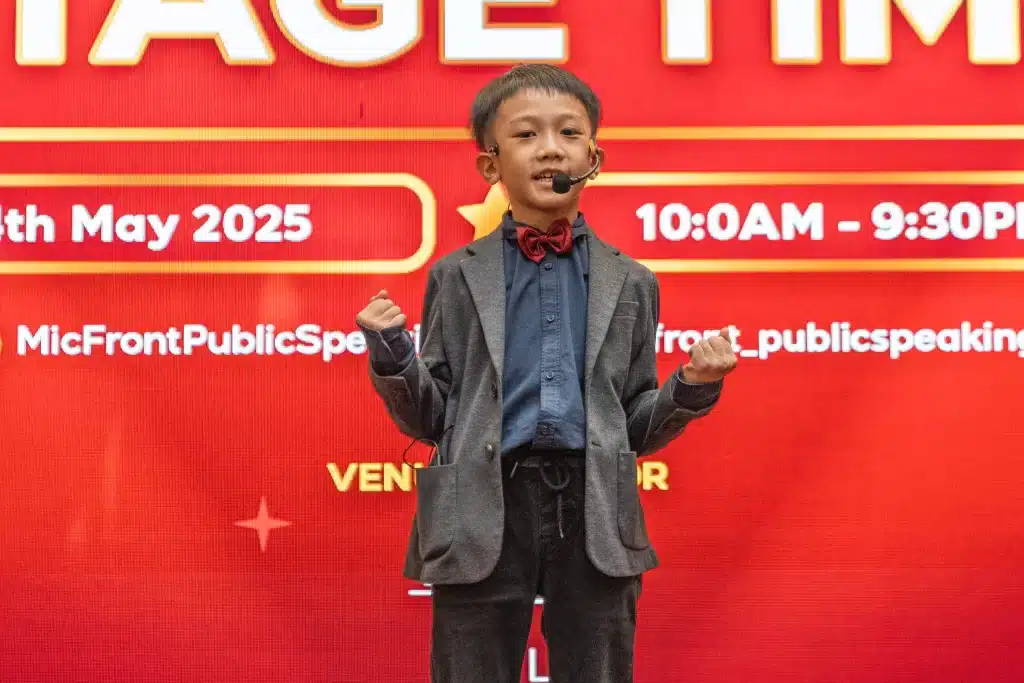
Imagine this: Your child is standing on stage, confidently speaking to an audience of teachers, parents, and classmates. No shaky hands. No nervous mumbling. Just a calm, clear voice and a smile.
For many parents in Malaysia, this seems like a dream — but the truth is, public speaking is not a “born-with” talent. It’s a skill that can be taught, and the earlier children start, the better they master it.
Why Public Speaking Skills Matter for Kids
In today’s competitive world, being intelligent isn’t enough. Confidence and the ability to express oneself clearly can set a child apart — not just in school, but in life. Here’s why it matters:
Boosts Self-Confidence
Standing in front of an audience may feel terrifying at first, but with guidance and practice, children learn to trust their own voice. This self-assurance doesn’t just help on stage — it carries into their studies, friendships, and decision-making.Sharpens Communication Skills
Public speaking teaches children how to organise their thoughts, choose the right words, and speak with clarity. These skills help in school presentations, group projects, and even casual conversations.Prepares for the Future
Whether it’s the SPM oral exam, a university scholarship interview, or a job presentation years later, the ability to speak confidently can open doors that remain closed to those who can’t.

Public Speaking for Kids: Why Now?
Our education system is placing more emphasis on communication. From PT3 presentations to SPM English oral tests, students are expected to express ideas clearly.
Outside the classroom, debate clubs, storytelling competitions, and student leadership positions are increasingly popular — and they all favour confident speakers.
Starting before 17 means your child has enough time to master these skills without the pressure of exams or looming adulthood.
Skills They’ll Learn Through Public Speaking
At MicFront Public Speaking, we train kids in ways that go far beyond “just talking.” Here are some of the skills your child will develop:

Voice projection & clarity — speaking so everyone can hear without shouting
Body language awareness — using posture, eye contact, and gestures to connect with the audience
Structuring ideas — learning to deliver a message in a way that’s engaging and easy to follow
Handling stage fright — turning nervous energy into confident delivery
Impromptu speaking — thinking and responding on the spot, a vital life skill
Common Myths Parents Have
Many parents delay public speaking lessons because of misconceptions. Let’s address a few:
“My child is shy — public speaking will be too hard for them.”
In fact, shy children often benefit the most. They learn that their voice matters, and with gradual exposure, their confidence blossoms.“They can learn it later as an adult.”
While adults can absolutely learn public speaking, kids absorb and adapt much faster. Think of it like learning a language — earlier is easier.“It’s only for future politicians or actors.”
Public speaking helps in every career — from engineers presenting ideas to entrepreneurs pitching investors.

Real-Life Transformation
One of our students, 12-year-old Aisyah*, joined MicFront barely able to introduce herself in front of the class. Six months later, she represented her school in a storytelling competition — and won second place.
(*Name changed for privacy)
Stories like hers aren’t rare. With the right guidance, children can make remarkable progress in a short time.
How Parents Can Support at Home
Even if your child isn’t enrolled in a class yet, you can start building confidence by:
Encouraging them to read aloud daily.
Asking them open-ended questions and listening without interrupting.
Having “mini speeches” at home — let them explain their favourite hobby or tell a funny story at dinner.
Praising effort, not just results.
Final Thoughts
Public speaking isn’t just about standing at a podium. It’s about equipping your child with confidence, communication skills, and the ability to think on their feet — skills that will serve them for a lifetime.
The best time to start? Now. Before the weight of exams and adult responsibilities make practice harder.
If you’re in Selangor or Kuala Lumpur and want to see your child grow in confidence, MicFront Public Speaking offers fun, interactive classes for ages 5–17.
Book a free trial class now, and give your child the gift of confidence.